Overheating Assessments Made Simple
At UK Overheating, our experienced Overheating Assessors provide Overheating Risk Assessments for both residential and commercial properties, ensuring compliance with Part O of the Building Regulations.
We offer expert services in CIBSE TM59 and TM59 overheating assessments, delivering tailored solutions to help you meet the required standards.


Overheating Assessments
When dynamic thermal modelling (DTM) is required as part of your overheating assessment, our expert assessor work collaboratively with your SAP Assessor to ensure all requirements are fully aligned. We integrate their inputs into our modelling process, ensuring both assessments support each other without conflict.
Our overheating assessors provide tailored guidance on key design factors, including:
Glazing performance (U-values & G-values)
Optimal glazing sizes and openable areas
Solar gain control through shading strategies
Effective heat removal via cross ventilation, mechanical ventilation, or cooling systems
We help you achieve compliance and comfort—without compromise.

Dynamic Thermal Modelling (TM59)
CIBSE TM59 Dynamic Thermal Modelling assesses internal temperature risks room by room, providing a more detailed overheating analysis than simplified methods.
A CIBSE TM59 Assessment allows for design adjustments if certain rooms are at risk of becoming too hot. Ideally, it should be completed before construction to integrate necessary changes early.
Dynamic Thermal Modelling is required for Building Regulations Part O when the simplified method isn’t suitable due to external noise or air quality issues. It also offers greater design flexibility for a more efficient and comfortable building.
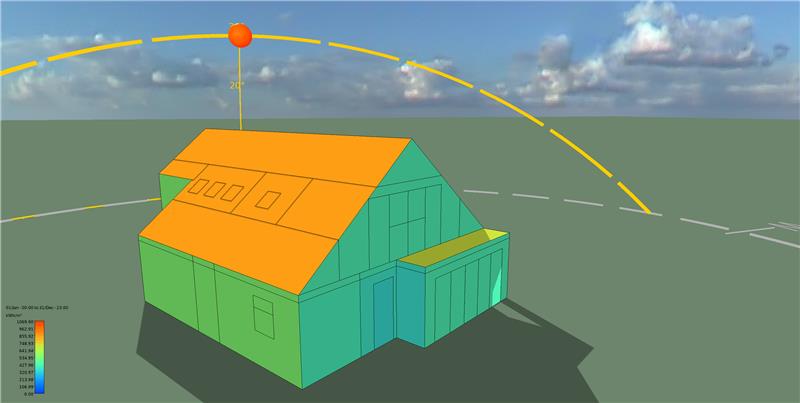
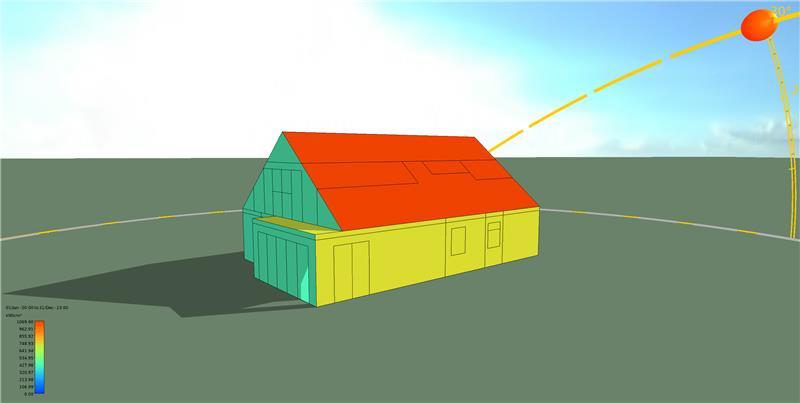
As part of our Dynamic Thermal Modelling process, we construct detailed 3D models of buildings within the IES Virtual Environment software.
These visualisations allow us to accurately simulate heat gains, ventilation, solar exposure, and internal temperatures throughout the year. By modelling the building in three dimensions, we can pinpoint overheating risks more precisely and provide actionable, site-specific recommendations—ensuring your report is both thorough and technically robust.


FAQs
Overheating occurs when the local indoor thermal environment presents conditions in excess of those acceptable for human thermal comfort or those that may adversely affect human health.
The main causes of a property overheating are:
- Solar heat gain
- Internal heat gains
- Poor removal of excess heat
Overheating in buildings has been highlighted as a key risk for the health and productivity of people and businesses in the UK. It is estimated that there are about 2,000 heat-related deaths each year in England and Wales. The government’s stated ambition is to build 300,000 homes per year. Most of these properties will be inhabited by 2080 when temperatures are projected to have risen by a range of 1.2 – 8.1 degrees in England under the medium emissions scenario and, if no action is taken, by 2050, an estimated 7,000 people will die prematurely from heat-related causes (though not all in homes) annually (CCC 2015).
Part L: Regulations for energy efficiency in buildings, covering insulation, heating, lighting, and ventilation to reduce carbon emissions.
Part O: Regulations for preventing overheating in buildings, ensuring proper ventilation and shading to keep indoor temperatures safe.
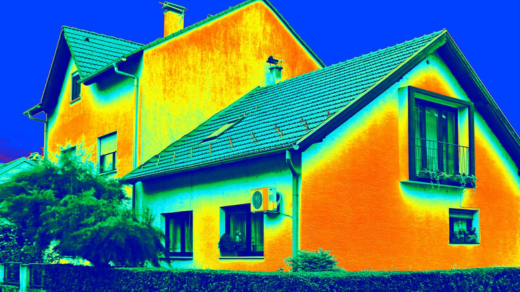
We use various methods including temperature modeling, thermal imaging, and an evaluation of factors like insulation, window placement, and ventilation to determine the risk of overheating in a home.
Overheating is often caused by factors like inadequate ventilation, excessive glazing (large windows), poor insulation, and a lack of shading. Building orientation and building design can also play significant roles.
Yes, the UK government and building codes are increasingly addressing overheating risks as part of new construction standards. This is especially relevant for builders and architects to ensure compliance with modern energy efficiency and comfort standards.

"Working with James is a pleasure and an education. His enthusiasm and expertise in the field of acoustics and overheating mitigation is infectious and a pragmatic and practical approach, driven by a desire to arrive at cost-effective solutions shines through.
As a consultant, he also has a good commercial understanding and that business acumen adds to his credibility and reliability. James is my ‘go to’ guy when it comes to overheating and acoustics."
Alex Naraian
Churchill Retirement Living

The team is professional, knowledgeable, and easy to work with. Highly recommend their services for any development facing overheating challenges."
Meet James
James is a founding partner of UK Overheating and is an expert in acoustics and overheating. He is a principal author of the Acoustics, Ventilation and Overheating: Residential Design Guide and of the Guide to Demonstrating Compliance with the Noise Requirements of Approved Document O.
He is also a contributor to the Future Homes Hub document Part O 2021 (England) Technical Guidance. James further advances his contribution to industry as Chairman of the Institute of Acoustics specialist Building Acoustics Group.